

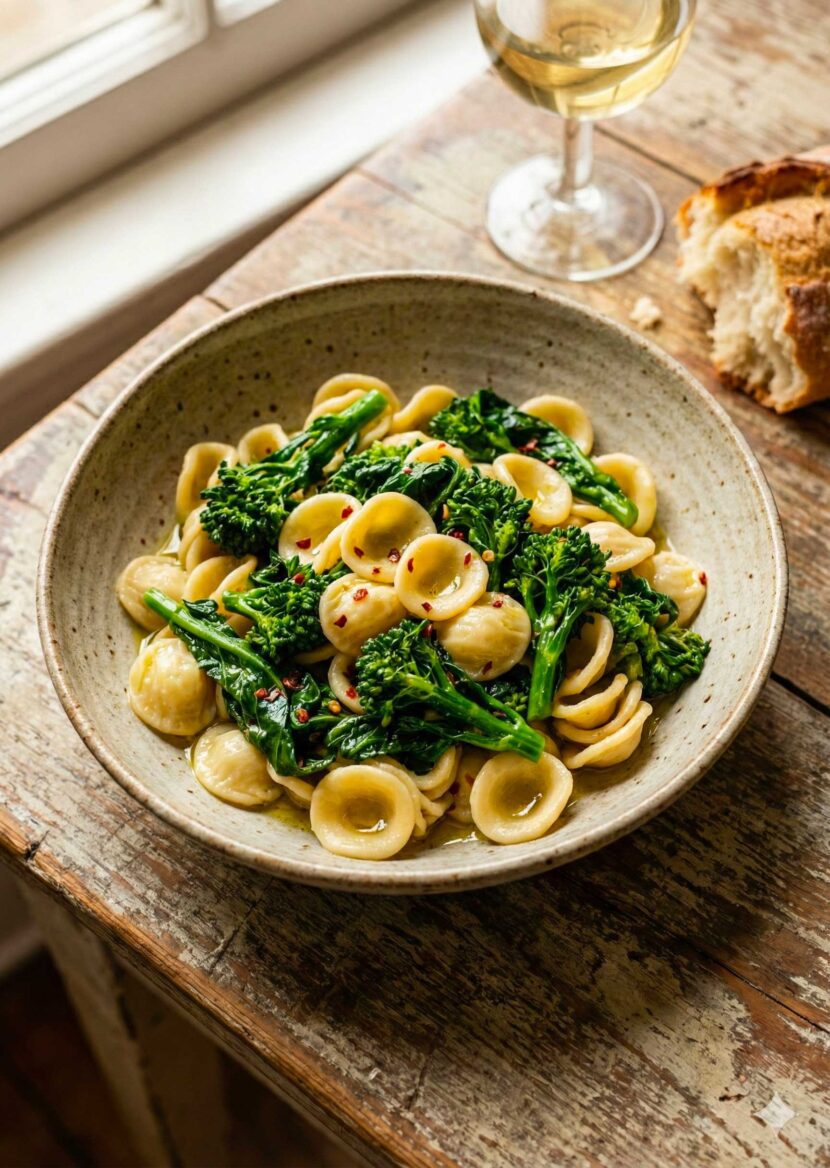
Orecchiette con le Cime di Rapa is one of the most iconic dishes hailing from the sun-drenched region of Puglia, particularly the city of Bari. This masterpiece of cucina povera transforms humble ingredients—broccoli rabe, anchovies, garlic, and semolina pasta—into a symphony of bold flavors. In Southern Italy, Sunday lunch often isn’t complete without a steaming bowl of these “little ears” cradling the slightly bitter greens and savory sauce.
The dish perfectly balances the earthiness of the vegetables with the salty punch of anchovies and the subtle heat of chili pepper, creating a texture and taste profile that is undeniably Apulian. Walking through the winding streets of Bari Vecchia, you might still see grandmothers (nonne) making fresh orecchiette by hand outside their doors, a tradition passed down for generations. While it looks simple, the magic lies in cooking the pasta and greens together in the same pot, allowing the starch to create a silky, natural emulsion. Perfect for a cozy dinner, this recipe yields 4 generous servings that will transport you straight to the Italian coast.
Ingredients
Serves: 4
- Fresh Orecchiette Pasta: 500g (1.1 lbs) fresh, or 400g (14 oz) dried.
- Cime di Rapa (Broccoli Rabe): 1 kg (2.2 lbs) – Note: Weigh before cleaning; you will use the florets and tender leaves.
- Anchovy Fillets in Oil: 4–5 fillets (high quality).
- Garlic: 2 cloves, peeled and lightly crushed.
- Extra Virgin Olive Oil: 80ml (1/3 cup) – preferably a robust Apulian oil.
- Red Chili Pepper (Peperoncino): 1 small fresh chili (sliced) or 1 tsp dried flakes.
- Sea Salt: To taste (for the pasta water).
- Toasted Breadcrumbs (Mollica): ½ cup (optional, traditional topping).
Instructions
- Prepare the Cime di Rapa: Clean the broccoli rabe by removing the tough outer stems and large, damaged leaves. Keep the florets and the tender, inner leaves. Wash them thoroughly under cold running water and drain.
- Boil the Water: Bring a large pot of water to a rolling boil. Add a generous pinch of sea salt. Note: Use slightly less salt than usual for pasta, as the anchovies will add salinity later.
- Cook the Greens: Add the cleaned Cime di Rapa to the boiling water. Let them cook for about 5 minutes until they are slightly tender but still bright green.
- Add the Pasta: Do not drain the greens! Add the orecchiette directly into the pot with the boiling greens. Cook according to the package instructions (usually 5–6 minutes for fresh, 10–12 for dried) until al dente. The starch from the pasta will help thicken the sauce.
- Prepare the Soffritto: While the pasta cooks, heat the olive oil in a large skillet or sauté pan over medium heat. Add the crushed garlic and chili pepper. Once the garlic is golden, add the anchovy fillets. Stir with a wooden spoon until the anchovies “melt” into the oil, creating a savory base. Remove the garlic cloves if you prefer a milder flavor.
- Combine and Sauté: Using a slotted spoon or spider strainer, transfer the pasta and greens directly from the water into the skillet with the flavored oil. Add a splash (about ¼ cup) of the starchy pasta water.
- Mantecatura (Emulsify): Toss vigorously over high heat for 1–2 minutes. The oil, pasta water, and broken-down anchovies should form a creamy coating around the pasta.
- Serve: Plate immediately. If using, sprinkle toasted breadcrumbs on top for a delightful crunch.
Chef’s Tips for Orecchiette con le Cime di Rapa
To truly master Orecchiette con le Cime di Rapa, you must pay attention to the balance of textures. Here are some professional insights:
- Don’t Skimp on the Oil: The sauce is essentially the olive oil emulsion. Use a high-quality Extra Virgin Olive Oil to bring the dish together.
- The “Melting” Anchovy: Even if you think you dislike anchovies, do not skip them. They dissolve completely in the hot oil, providing umami rather than a fishy taste.
- Texture Upgrade: In Puglia, cheese is rarely used on this dish. Instead, we use mollica fritta (fried breadcrumbs). Toast stale breadcrumbs in a little oil until golden brown to add a crispy contrast to the soft pasta.
- Wine Pairing: Pair this dish with a local white wine like Castel del Monte or a rosé from Salento. If you prefer red, a young Primitivo works well with the bitterness of the greens.
- Substitutions: If you cannot find Cime di Rapa (rapini), you can use regular broccoli, though the flavor will be sweeter and less authentic.
Regional Notes, History & Cultural Insights
Orecchiette con le Cime di Rapa is the culinary flag of Puglia. To understand this dish is to understand the history of the region itself.
The Shape of History The name orecchiette translates literally to “little ears.” This pasta shape dates back to the 12th or 13th century. Historically, it was made with just hard durum wheat semolina and water—no eggs—because eggs were considered a luxury item for the wealthy. The shape is created by dragging a small chunk of dough across a wooden board with a knife and then inverting it over the thumb. This creates a rough surface on the outside (perfect for holding sauce) and a thinner center.
Cultural Significance This dish is a prime example of Cucina Povera (peasant cooking). In the rocky, arid landscapes of Puglia, wild greens like broccoli rabe grew abundantly. Combined with dried pasta that could be stored for months, it provided a nutritious, filling meal for families.
Regional Variations While the version with anchovies is the classic Barese (from Bari) method, moving further south into Salento, you might find versions that omit the anchovies but increase the chili heat. Some modern interpretations might add a crumbling of ricotta forte, a pungent, fermented cheese spread typical of the region, though purists stick to the anchovy oil base.
For those interested in exploring other authentic pasta traditions, check out our guide to Homemade Cavatelli Pasta, another semolina-based favorite from the south. For deeper historical context on the origins of Apulian cuisine, the Accademia Italiana della Cucina offers extensive resources on regional specialties.
Conclusion
There is something incredibly grounding about a bowl of Orecchiette con le Cime di Rapa. It is a dish that demands very little time but delivers immense flavor and comfort. Whether you are cooking for a quick weeknight dinner or hosting an Italian-themed dinner party, this recipe brings the warmth and rusticity of Puglia into your kitchen. We hope you try making this at home—don’t forget the breadcrumbs!


