

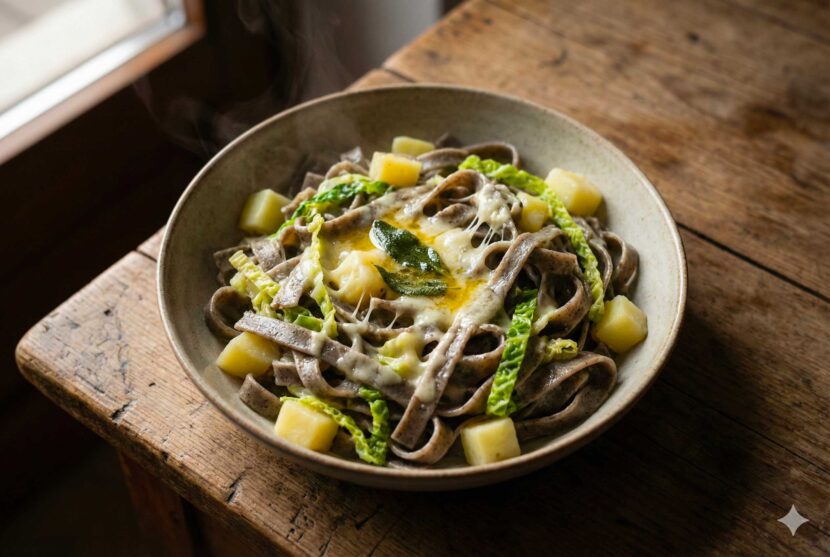
Pizzoccheri della Valtellina is the undisputed king of Italian mountain comfort food, a rustic masterpiece hailing from the snowy peaks of Lombardy. Born in the rugged Valtellina valley near the Swiss border, this dish is far more than just pasta; it is a warm embrace on a cold day, featuring hearty buckwheat noodles, sweet savoy cabbage, earthy potatoes, and a luxurious blanket of melted cheese and garlic butter.
Unlike the refined pastas of the south, this dish tells a story of survival and ingenuity in the Alps, where buckwheat was one of the few grains that could thrive. The texture is unique—slightly nutty and toothsome—while the generous amount of butter and alpine cheese makes it incredibly satisfying. It is traditionally served as a piatto unico (single course) because of its richness. This recipe serves 4 hungry people and brings the authentic baita (mountain lodge) atmosphere right into your dining room.
Ingredients
Serves 4
For the Pasta Dough:
- 400g (3 ¼ cups) Buckwheat flour (fine ground)
- 100g (¾ cup) All-purpose flour (plus extra for dusting)
- 280ml (approx. 1 ¼ cups) Warm water
- Pinch of salt
For the Condiment & Vegetables:
- 200g (7 oz) Savoy cabbage, shredded (ribs removed)
- 250g (9 oz) Waxy potatoes, peeled and cut into cubes
- 200g (7 oz) Butter (high quality)
- 250g (9 oz) Valtellina Casera DOP cheese (substitute: Fontina or mild Gruyère), cubed
- 150g (1 ½ cups) Grana Padano DOP or Parmesan, grated
- 4 cloves Garlic, peeled and halved
- 4–5 Fresh sage leaves
- Black pepper, fresh cracked
Instructions
- Prepare the Dough In a large bowl, mix the buckwheat and all-purpose flours. Add the pinch of salt and gradually pour in the warm water. Knead vigorously for about 5–10 minutes on a wooden board until the dough is smooth and elastic. If it feels too sticky, add a dusting of wheat flour. Wrap in plastic wrap and let it rest for 30 minutes.
- Shape the Pizzoccheri Roll out the dough to a thickness of about 2–3mm (1/8 inch). Cut the sheet into strips roughly 7cm (3 inches) wide. Stack the strips (dusting between them so they don’t stick) and slice them crosswise into ribbons about 5mm (1/4 inch) wide. They should look like short, flat fettuccine.
- Boil the Vegetables Bring a large pot of salted water to a rolling boil. Add the cubed potatoes and the shredded cabbage. Let them boil for about 5–8 minutes. They should be partially cooked but not falling apart.
- Cook the Pasta Add the Pizzoccheri della Valtellina noodles directly into the pot with the boiling vegetables. Cook for roughly 10–12 minutes. Taste a noodle to ensure it is cooked through but still has a slight bite (al dente).
- Prepare the Garlic Butter While the pasta cooks, melt the butter in a small saucepan over medium heat. Add the garlic cloves and sage leaves. Let the butter foam and brown slightly (nutty aroma), allowing the garlic to infuse the fat. Discard the garlic cloves once golden.
- Layer and Serve Using a slotted spoon, lift the pasta and vegetables out of the water (don’t drain in a colander; you want them wet). Place a layer in a large, warm serving dish. Sprinkle generously with the cubed Casera cheese and grated Grana Padano. Repeat with another layer of hot pasta/veg and cheese until all ingredients are used.
- ** The Final Touch** Pour the sizzling hot garlic-sage butter over the top of the dish. The heat will melt the cheese instantly. Mix gently to coat everything and serve immediately with cracked black pepper.
Chef’s Tips for Pizzoccheri della Valtellina
- The Cheese Factor: If you cannot find Valtellina Casera, do not use mozzarella (it is too watery and mild). A mix of Italian Fontina and a bit of Swiss Gruyère is the best alternative to mimic that alpine stretch and funk.
- Don’t Overwork: Buckwheat lacks gluten. While you need to knead it to combine the ingredients, don’t expect the same elasticity as egg pasta. Handle the cut noodles gently.
- Seasonal Greens: While Savoy cabbage is the winter standard, in the summer, locals often substitute it with Swiss Chard (use the stems and leaves) or green beans.
- Wine Pairing: This is a rich, fatty dish that requires a tannic red wine to cleanse the palate. The perfect match is a Valtellina Superiore or a Sforzato di Valtellina, both made from the local Nebbiolo grape (Chiavennasca).
- Serving: Warm your bowls before serving. The cheese solidifies quickly as it cools, so Pizzoccheri della Valtellina must be eaten piping hot.
Regional Notes, History & Cultural Insights
The history of Pizzoccheri della Valtellina is deeply intertwined with the geography of the Rhaetian Alps. Buckwheat (grano saraceno) is not technically a wheat but a seed related to rhubarb. It was introduced to Italy around the 16th century, likely through trade routes from Siberia or the Middle East. It flourished in the alpine climate of Valtellina where standard wheat struggled to grow.
The town of Teglio is considered the spiritual home of this dish. Here, the recipe is protected zealously by the Accademia del Pizzocchero di Teglio, an organization dedicated to preserving the authenticity of the ingredients and method. According to the Academy, the ratio of buckwheat to wheat flour is sacred, ensuring the pasta retains its signature dark color and earthy flavor.
Culturally, this dish represents the concept of “cucina povera” (peasant cooking) elevated to an art form. It uses humble, shelf-stable ingredients (potatoes, winter cabbage, flour, cheese) to create a meal that provided immense energy for farmers working in the cold mountains. Today, it is a Sunday staple in Lombardy and a must-eat for anyone skiing in the region. If you enjoy the rich, creamy textures of northern cooking, you might also love our recipe for Risotto alla Milanese, another Lombard classic that warms the soul.
Conclusion
There is perhaps no dish in the Italian repertoire that comforts the soul quite like Pizzoccheri della Valtellina. It captures the essence of the mountains: rustic, hearty, and unpretentious, yet incredibly indulgent. The nuttiness of the buckwheat combined with the sweetness of the cabbage and the richness of the alpine cheese creates a flavor profile you will crave all winter long. Gather your family, pour a glass of red wine, and enjoy this masterpiece of Lombardy.


