

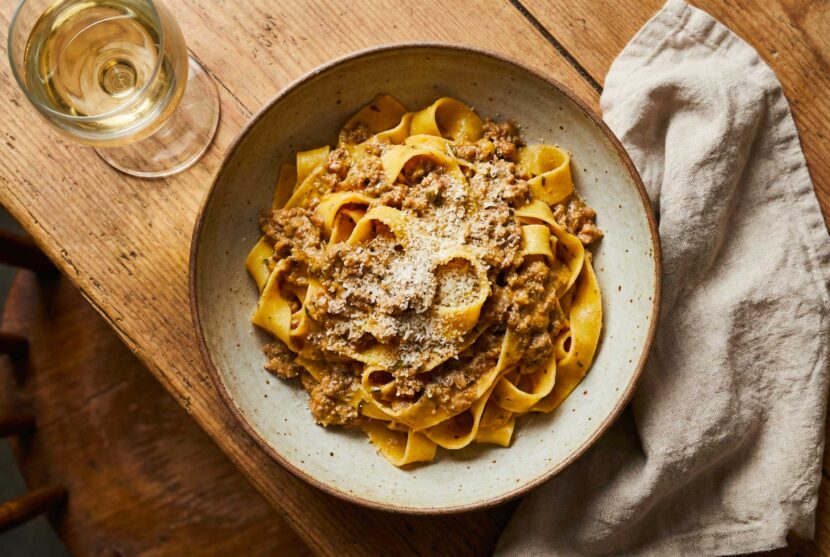
Tagliatelle al Ragù Bianco is one of the most comforting, understated masterpieces of the Emilia-Romagna region, offering a sophisticated alternative to the tomato-heavy sauces most the world knows. Unlike its more famous cousin, the classic Ragù alla Bolognese, this “white” version skips the tomatoes entirely, focusing instead on the pure, savory harmony of mixed ground meats, aromatic vegetables, and white wine. The result is a sauce that is deeply flavorful, incredibly tender, and lighter on the palate, allowing the richness of the fresh egg pasta to truly shine.
In Italy, specifically around Bologna and Modena, this dish represents the essence of home cooking—using high-quality ingredients to create something greater than the sum of its parts. The sauce clings affectionately to the porous, golden ribbons of pasta, delivering a savory, velvety bite that feels like a warm embrace. It is a dish that speaks of history, predating the arrival of tomatoes in Italian cuisine, and remains a Sunday favorite for families across the region. This recipe yields 4 generous servings of authentic Italian comfort.
Ingredients
Serves 4
- Fresh Egg Pasta: 400g (14 oz) fresh Tagliatelle (store-bought or homemade)
- Ground Beef: 200g (7 oz) lean ground beef (preferably a fatty cut like chuck)
- Ground Pork: 200g (7 oz) ground pork (or unseasoned sausage meat)
- Pancetta: 50g (1.8 oz) diced (optional, for depth)
- Onion: 1 medium, finely chopped (yellow or white)
- Carrot: 1 medium, finely chopped
- Celery: 1 stalk, finely chopped
- White Wine: 120ml (½ cup) dry white wine (like Trebbiano or Pinot Grigio)
- Broth: 250ml (1 cup) vegetable or beef stock (warm)
- Milk or Cream: 60ml (¼ cup) whole milk or heavy cream (adds silkiness)
- Herbs: 1 sprig fresh rosemary, 2 sage leaves, and 1 bay leaf tied together
- Olive Oil: 2 tbsp Extra Virgin Olive Oil
- Butter: 1 tbsp unsalted butter
- Cheese: Grated Parmigiano Reggiano for serving
- Seasoning: Sea salt and freshly cracked black pepper to taste
Instructions
- Prepare the Soffritto: In a heavy-bottomed pot or Dutch oven, heat the olive oil and butter over medium heat. Add the diced pancetta and cook until the fat renders. Add the finely chopped onion, carrot, and celery. Sauté gently for 8–10 minutes until the vegetables are soft and translucent, but not browned.
- Brown the Meats: Increase the heat to medium-high. Add the ground beef and pork to the pot. Break up the meat with a wooden spoon, cooking until it is browned and the moisture has evaporated. This step is crucial for developing deep flavor.
- Deglaze with Wine: Pour in the dry white wine. Scrape the bottom of the pot to release any caramelized bits (fond). Let the wine bubble and reduce until the smell of alcohol has disappeared and the liquid is mostly evaporated.
- Simmer: Lower the heat to low. Add the herb bundle (rosemary, sage, bay leaf) and pour in the warm stock. Cover partially with a lid and let it simmer gently for at least 60–90 minutes. Stir occasionally. If the sauce gets too dry, add a splash more broth.
- Finish the Sauce: Once the meat is tender and the flavors have melded, remove the herb bundle. Stir in the milk (or heavy cream) and simmer for another 5 minutes uncovered to thicken the sauce slightly. Season with salt and generous black pepper to taste.
- Cook the Pasta: Bring a large pot of salted water to a rolling boil. Add the fresh tagliatelle. Since it is fresh pasta, it will cook quickly (usually 2–3 minutes). Drain the pasta, reserving a half-cup of pasta water.
- Combine and Serve: Toss the cooked tagliatelle directly into the pot with the sauce. Add a splash of pasta water if needed to emulsify the sauce so it coats every strand. Serve immediately, topped with a snowfall of grated Parmigiano Reggiano.
Chef’s Tips for Tagliatelle al Ragù Bianco
To truly master Tagliatelle al Ragù Bianco, attention to detail is key. Here is how to elevate your dish:
- The Cut of Meat: Do not use extra-lean beef. You need a fat content of at least 20% to ensure the sauce remains luscious and not dry. The pork adds necessary sweetness and fat that lean beef lacks.
- Herb Infusion: Using a “bouquet garni” (tying your herbs with kitchen twine) makes it easy to remove them later, leaving behind only their aroma without woody stems in your pasta.
- Pasta Selection: If you cannot find fresh tagliatelle, dried egg tagliatelle is the next best option. Avoid smooth, water-based spaghetti; the sauce needs the rough texture of egg pasta to adhere properly.
- Wine Pairing: Serve this dish with the same wine you used to cook it. A crisp, dry white from Emilia-Romagna, such as a Pignoletto, cuts through the richness of the meat beautifully.
- A Note on Cream: Purists might debate the use of cream. However, in a white ragù, a splash of milk or cream towards the end mimics the lactic sweetness often found in Bolognese recipes and binds the fats for a velvety mouthfeel.
For a look at the more globally recognized version of this dish, check out our guide to Classic Lasagna Bolognese, which utilizes the tomato-based red ragù.
Regional Notes, History & Cultural Insights
The history of Tagliatelle al Ragù Bianco offers a fascinating glimpse into Italian culinary evolution. While the world associates Italian pasta sauce almost exclusively with tomatoes, the tomato was actually a late addition to the Italian pantry, arriving from the Americas in the 16th century and not becoming a staple in pasta sauces until the late 17th or early 18th century.
Therefore, “white” ragùs are, in a historical sense, more ancient than their red counterparts. In the courts of the Renaissance, meat stews served over pasta were rich, savory, and devoid of tomatoes. In Emilia-Romagna, a region revered as the gastronomic heart of Italy, this tradition persisted even after the tomato took over.
Culturally, this dish is less about the “Sunday gravy” slow-cook marathon associated with Southern Italy and more about the elegance of the ingredients. It is a staple in the cities of Bologna and Modena, often served in the autumn when fresh mushrooms (sometimes added to the ragù) are in season. The locals appreciate this dish because it highlights the quality of the local pork and beef without masking it with the acidity of tomatoes.
According to the Accademia Italiana della Cucina, preserving these variations is essential to maintaining the identity of regional Italian cuisine. While the “Red” Bolognese has a deposited official recipe, the “White” version allows for slight family variations—some add porcini mushrooms, others a pinch of nutmeg—but the soul of the dish remains the meat and the soffritto.
Conclusion
There is a quiet elegance to Tagliatelle al Ragù Bianco that captures the heart of anyone who tries it. It is a dish that doesn’t need to shout to be heard; its rich, savory depth and creamy texture speak for themselves. Whether you are looking for a comforting meal on a cold evening or wanting to impress guests with an authentic Italian course that goes beyond the standard red sauce, this recipe is a perfect choice. We hope this dish brings a taste of Emilia-Romagna to your table. Buon appetito!


