

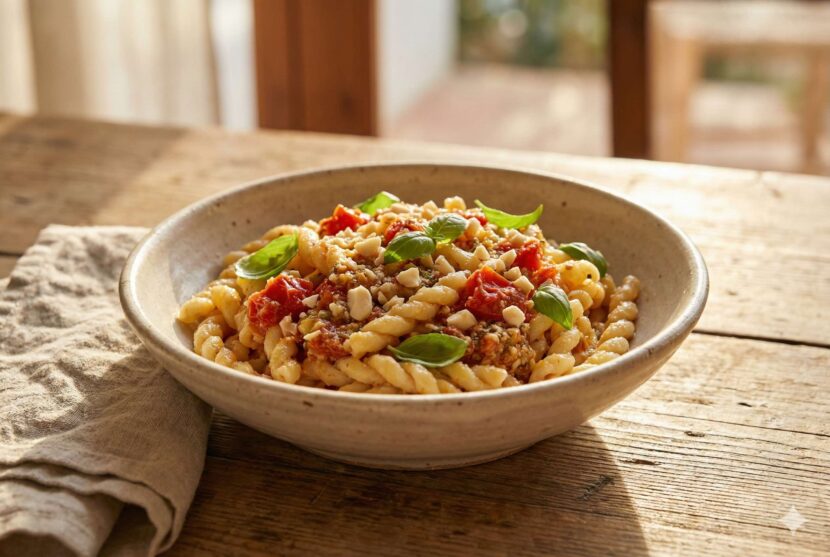
Pesto Trapanese (mandorle + pomodoro) is the sun-drenched, vibrant answer to the more famous green pesto from Genoa, hailing from the western coast of Sicily. Unlike its northern cousin which relies heavily on pine nuts and basil, this Sicilian masterpiece celebrates the local bounty of the Trapani province: crunchy almonds, sweet sun-ripened tomatoes, and pungent garlic.
Known locally as Agliata Trapanese or Pesto alla Trapanese, this dish is a sensory journey to the Mediterranean summer. It is a “raw” sauce, born out of necessity during the scorching Sicilian heat when lighting a fire to cook sauce was unthinkable. The texture is rough and rustic, offering a delightful crunch from the almonds and a burst of acidity from the fresh tomatoes. It serves 4 people perfectly and is traditionally paired with busiate, a corkscrew-shaped pasta that catches every bit of the savory condiment, though spaghetti is a common alternative.
Ingredients
Serves 4
- Pasta: 400g (14 oz) Busiate (traditional) or Spaghetti/Linguine.
- Tomatoes: 500g (1.1 lbs) Ripe vine tomatoes or Picasso/Cherry tomatoes (sweetness is key).
- Almonds: 50g (1/3 cup) Peeled almonds (raw or lightly toasted).
- Basil: 1 large bunch (approx. 30g/1 oz) Fresh basil leaves, washed and dried.
- Garlic: 1-2 cloves (adjust to taste, red garlic is traditional).
- Cheese: 50g (1/2 cup) Pecorino Siciliano DOP (grated). Note: You can use Pecorino Romano if Siciliano is unavailable.
- Olive Oil: 4-5 tbsp Extra Virgin Olive Oil (high quality).
- Seasoning: Salt and cracked black pepper to taste.
Instructions
- Prepare the Tomatoes: Bring a pot of water to a boil. Score an “X” on the bottom of the larger tomatoes and blanch them for 30 seconds. Remove and plunge into ice water. Peel the skins, remove the seeds, and chop the flesh into small cubes. If using cherry tomatoes, simply wash and halve them. Place the chopped tomatoes in a colander for 10 minutes to drain excess water.
- Process the Almonds and Garlic: In a food processor (or a traditional mortar and pestle for the best texture), combine the almonds and garlic cloves. Pulse until you have a coarse, grainy texture. Do not blend into a fine powder; you want the crunch.
- Add Basil and Oil: Add the fresh basil leaves and a pinch of coarse salt. Pulse again while slowly drizzling in the extra virgin olive oil. The mixture should be creamy but still textured.
- Combine with Tomatoes: Transfer the almond-basil mixture to a large serving bowl. Fold in the chopped tomatoes and the grated Pecorino cheese. Mix gently with a spoon. Taste and adjust for salt and pepper. Let the sauce sit at room temperature while the pasta cooks to allow the flavors to meld.
- Cook the Pasta: Boil the pasta in salted water until al dente. Reserve a small cup of the starchy pasta water before draining.
- Toss and Serve: Add the hot pasta directly to the bowl with the pesto. Toss vigorously to coat the strands. If the sauce feels too dry, add a splash of the reserved pasta water to loosen it up. Serve immediately.
Chef’s Tips for [Pesto Trapanese (mandorle + pomodoro)]
- Toast the Almonds: For a deeper, nuttier flavor profile, lightly toast the almonds in a dry pan for 2-3 minutes before blending. This elevates the Pesto Trapanese (mandorle + pomodoro) significantly.
- The “Mortar” Difference: If you have the time, use a marble mortar and wooden pestle. Pounding the ingredients releases essential oils from the basil and garlic that blades simply cannot replicate.
- Garlic Intensity: If raw garlic is too harsh for your palate, remove the inner green germ (the “soul”) of the garlic clove, which makes it milder and more digestible.
- Wine Pairing: Pair this dish with a chilled white Sicilian wine, such as a Grillo or Catarratto. The crisp acidity cuts through the richness of the oil and nuts.
- Substitutions: If you cannot find Busiate pasta, try Fusilli bucati lunghi. For a different twist on Sicilian flavors, check out our recipe for Pasta alla Norma, which also highlights tomatoes and cheese.
Regional Notes, History & Cultural Insights
The history of Pesto Trapanese (mandorle + pomodoro) is a fascinating tale of maritime exchange. Trapani, a crescent-shaped city on the western tip of Sicily, was a vital trading hub in the Mediterranean. Centuries ago, Genovese sailors (from Genoa, Liguria) would dock in the port of Trapani on their routes from the Far East. They brought with them their tradition of Agliata Ligure (a garlic and walnut sauce), which eventually evolved into the famous Pesto Genovese.
The people of Trapani fell in love with the concept but adapted it to their terroir. They replaced the pine nuts (which were scarce) with the abundant almonds from the Sicilian hinterland. They added tomatoes, which thrive in the volcanic, sun-baked soil, and used the local red garlic of Nubia.
Culturally, this dish represents the Sicilian philosophy of “minimum effort, maximum flavor.” It is intrinsically tied to the summer harvest. In many Sicilian households, making this pesto is a communal activity, with family members blanching tomatoes and pounding almonds together. It is a dish that respects the ingredient: the tomato must be sweet, the oil must be fruity, and the almond must be crisp.
According to the Italian Academy of Cuisine (Accademia Italiana della Cucina), this variation is officially recognized as a Traditional Agri-Food Product (PAT), cementing its status not just as a recipe, but as a piece of edible history.
Conclusion
Bringing Pesto Trapanese (mandorle + pomodoro) into your kitchen is like opening a window to the Sicilian coast. It is fresh, incredibly aromatic, and ready in the time it takes to boil pasta. Whether you are looking for a quick weeknight dinner or a special Sunday lunch, this dish delivers the warmth and passion of Italy in every bite. Buon appetito!


