

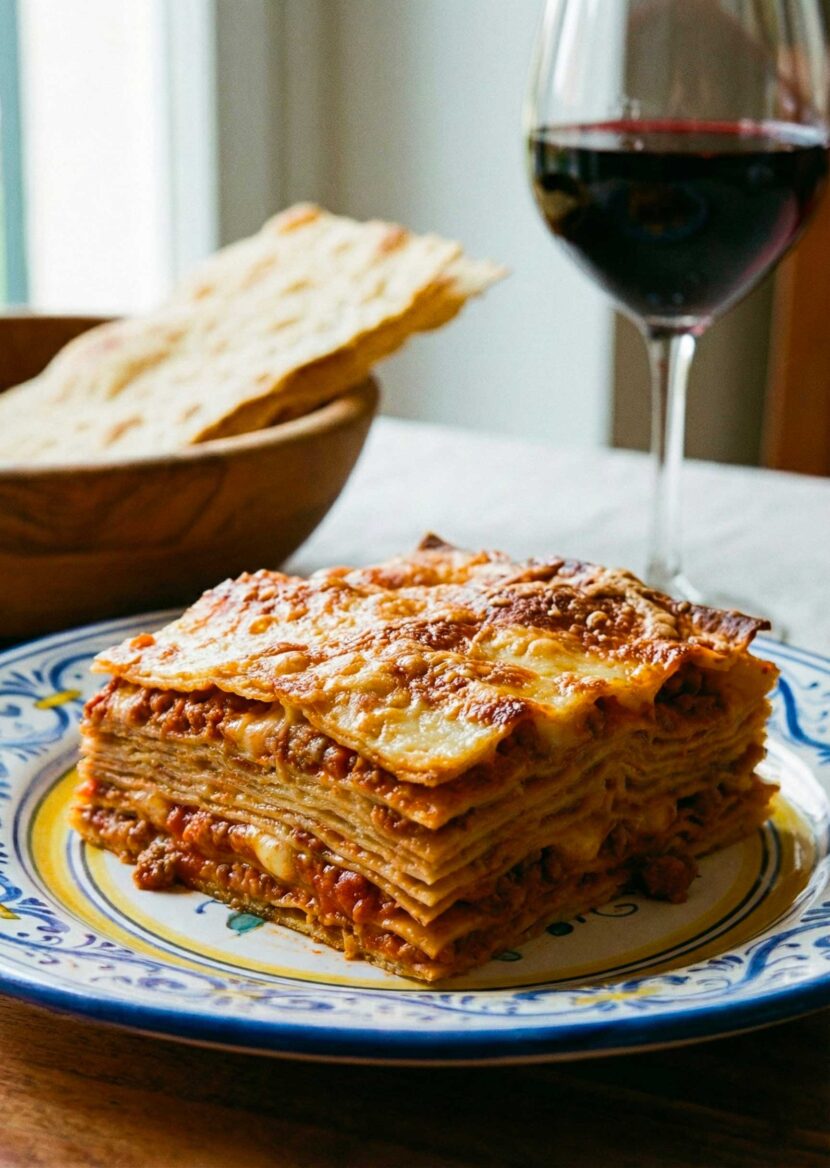
Pane Carasau Lasagnato, a rustic and soul-warming Sardinian lasagna made with traditional “music paper” flatbread instead of pasta, is a culinary masterpiece that defines the rugged beauty of Italy’s second-largest island. In Sardinia, this dish is often referred to as a variation of Frattau, but when layered and baked like a traditional lasagna, it becomes a sophisticated centerpiece of the island’s shepherd culture. Imagine layers of razor-thin, crispy bread that have been briefly kissed by warm lamb or beef broth, transforming into a tender, melt-in-your-mouth texture that perfectly holds a rich tomato ragù and the sharp, salty tang of aged Pecorino Sardo.
The experience of eating Pane Carasau Lasagnato is one of deep, earthy comfort. The aroma is dominated by slow-cooked meat and the toasted, cereal notes of the ancient durum wheat bread. As you cut through the layers, you see the beautiful stratification of the Sardinian landscape reflected on your plate—simple ingredients gathered from the hills and plains, elevated through patience and tradition. It is a dish that speaks of ancient firesides and the resourcefulness of island life, where nothing goes to waste and every ingredient is treated with reverence. For those seeking an authentic taste of Sardinia beyond the coast, this “bread lasagna” offers a flavorful journey into the heart of the Mediterranean.
Ingredients
Serves 4
- 8-10 large sheets of Pane Carasau (Sardinian flatbread)
- 500ml (2 cups) High-quality meat broth (lamb or beef)
- 500g (1.1 lbs) Classic Italian meat ragù (beef and pork blend)
- 200g (7 oz) Pecorino Sardo, freshly grated
- 250g (9 oz) Fresh mozzarella or Provola, diced
- 2 tablespoons Extra virgin olive oil
- Fresh basil leaves for garnish
Instructions
- Prepare the Ragù and Broth: Ensure your meat ragù is warm and slightly more fluid than a standard pasta sauce. Heat the meat broth in a wide, shallow pan until it is simmering gently but not boiling.
- The “Dipping” Ritual: This is the most delicate step. Take a sheet of Pane Carasau and quickly dip it into the warm broth for just 2–3 seconds. The bread should soften slightly but still retain some structure; do not let it become mushy.
- The Base Layer: Spread a thin layer of ragù on the bottom of a rectangular baking dish. Place the first layer of moistened Pane Carasau on top, breaking pieces to fit the corners if necessary.
- Layering the Flavors: Over the bread, spread a generous layer of ragù, followed by a handful of diced mozzarella and a heavy dusting of grated Pecorino Sardo.
- Build the Height: Repeat the process—dipped bread, ragù, mozzarella, and Pecorino—until you have created at least 5 or 6 layers.
- The Top Crust: Finish the final layer with a rich coating of ragù and a very generous amount of Pecorino Sardo to create a savory, golden crust.
- Baking: Place in a preheated oven at 180°C (350°F) for about 20–25 minutes. The edges should be bubbling and the top should be slightly browned.
- Resting: Let the dish rest for 10 minutes before slicing. This allows the layers to set and the bread to fully absorb the savory juices.
Chef’s Tips for Pane Carasau Lasagnato
Mastering Pane Carasau Lasagnato requires a “light touch” with the broth. If you soak the bread too long, it will lose its distinct layers and become a homogeneous paste. The goal is to feel the delicate textures of the flatbread within the sauce.
- The Broth Quality: In Sardinia, the broth is everything. If you can make a homemade lamb broth, the authenticity of the flavor will skyrocket.
- Cheese Selection: Always use Pecorino Sardo rather than Romano if possible. Sardo is slightly sweeter and nuttier, which balances the intense tomato ragù better.
- Wine Pairing: Serve this with a bold Cannonau di Sardegna. Its high tannins and dark fruit notes are the perfect match for the richness of the ragù and the saltiness of the pecorino.
- Internal Link: If you love the idea of non-traditional pasta shapes, check out our guide to Pasta alla Norma for another island-inspired favorite.
Regional Notes, History & Cultural Insights
Pane Carasau Lasagnato is a dish born from necessity and the nomadic lifestyle of Sardinian shepherds. Pane Carasau itself, often called carta di musica (music paper) due to its thinness, was designed to last for months during long periods of transhumance in the mountains. According to the Sardegna Turismo official cultural archives, this bread is one of the oldest in the world, with roots stretching back to the Nuragic civilization.
The evolution from dry bread to “lasagna” occurred as a way to transform a long-lasting pantry staple into a festive meal. Historically, when shepherds returned home, their wives would celebrate by softening the dry bread with meat juices and cheese. This culinary technique demonstrates the Sardinian philosophy of “Ajo!”—an exclamation of encouragement and community. In 2026, as we look for sustainable and ancient grains, the use of Pane Carasau (made from high-protein durum wheat) is gaining international recognition not just for its taste, but for its historical significance as a “traveling food” that refuses to spoil.
Conclusion
Cooking Pane Carasau Lasagnato is a beautiful way to honor Sardinian heritage in your own home. It is a dish that proves you don’t need fresh pasta to create a world-class lasagna; you only need high-quality ingredients and a respect for tradition. We hope this rustic, layered treasure brings the spirit of the Mediterranean wild to your dinner table tonight!


