

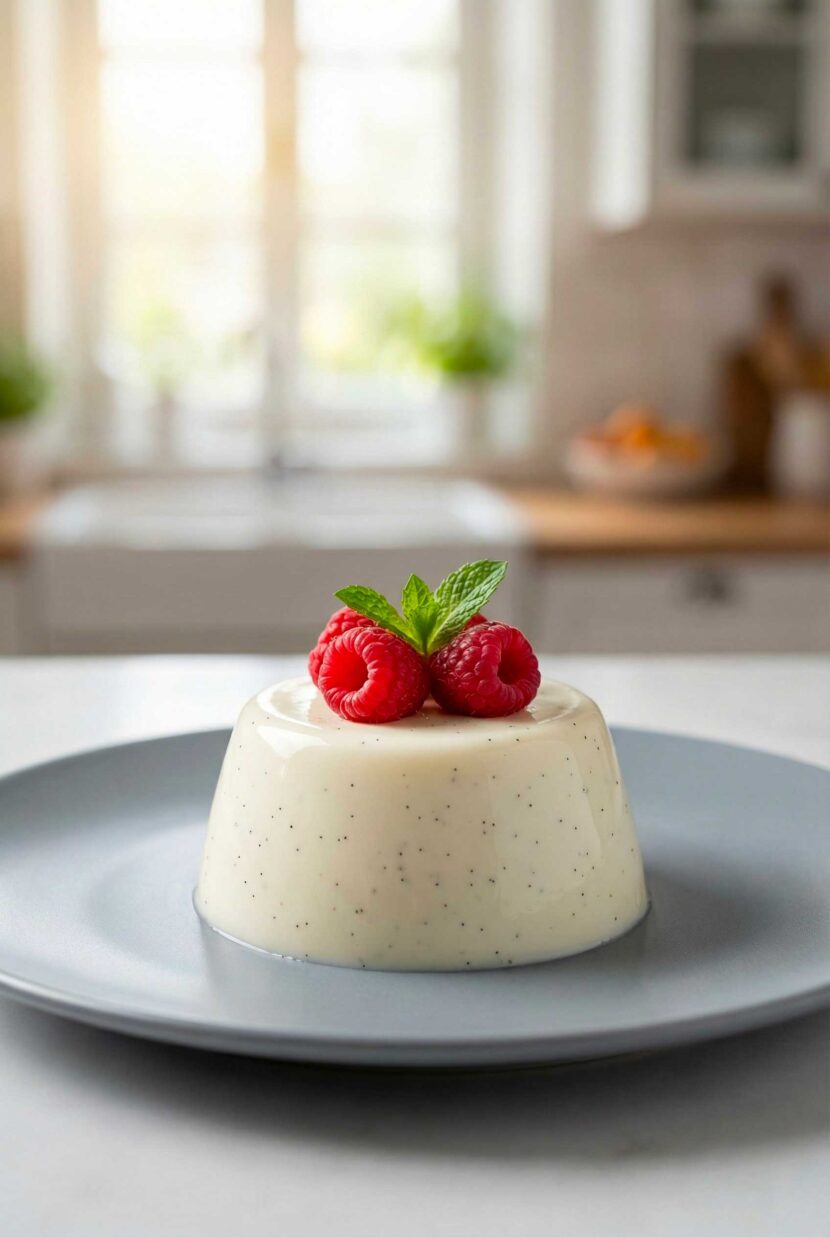
Panna cotta classica, a silky-smooth and elegant Italian chilled cream dessert, is the epitome of Piedmontese confectionery tradition. Often described as the most famous “dolce al cucchiaio” (spoon dessert) in the world, its name literally translates to “cooked cream.” Despite its sophisticated appearance on restaurant menus from New York to Tokyo, the heart of a true Panna cotta classica lies in its minimalist perfection: the delicate balance between high-quality dairy, the aromatic whisper of real vanilla, and that iconic, slight “wobble” on the plate.
Originating from the Langhe area in the Piedmont region, this dessert is celebrated for its clean palate and ivory-white aesthetic. Unlike puddings or custards that rely on egg yolks, the Panna cotta classica uses gelatin to achieve a texture that is firm enough to hold its shape yet creamy enough to melt instantly on the tongue. It is a sensory experience of pure, cool indulgence—a white canvas often adorned with a simple berry coulis or a caramel drizzle, making it the perfect refreshing finale to a rich Italian meal.
Ingredients
To create an authentic Panna cotta classica, the quality of the cream is paramount. Look for fresh heavy cream with a high fat content for the best results.
Serves 4
- Heavy Cream: 500ml (approx. 2 cups / 17 fl oz)
- Granulated Sugar: 80g (approx. ⅓ cup)
- Gelatin Sheets: 8g (approx. 4 sheets of “colla di pesce”) or 2 ¼ tsp powdered gelatin
- Vanilla Bean: 1 whole pod (or 1 tsp of high-quality vanilla bean paste)
- Cold Water: For blooming the gelatin
Instructions
- Bloom the Gelatin: Place the gelatin sheets in a bowl of very cold water and let them soak for about 10 minutes until soft and pliable. If using powder, follow the package instructions for blooming in a small amount of water.
- Infuse the Cream: In a small saucepan, combine the heavy cream and sugar. Split the vanilla bean lengthwise, scrape out the seeds with the back of a knife, and add both the seeds and the pod to the cream.
- Heat Gently: Place the saucepan over medium-low heat. Stir constantly to dissolve the sugar. Bring the mixture just to the point of simmering—do not let it reach a full boil, as this can affect the cream’s flavor and the gelatin’s setting power.
- Incorporate Gelatin: Remove the pan from the heat. Take the gelatin sheets out of the water, squeeze out the excess liquid, and add them to the hot cream. Whisk gently until the gelatin has completely dissolved.
- Strain: Remove the vanilla pod. Pour the mixture through a fine-mesh sieve into a jug to ensure a perfectly smooth texture and to remove any large vanilla fragments.
- Mold and Chill: Pour the liquid into 4 individual ramekins or molds. Allow them to cool to room temperature, then cover with plastic wrap and refrigerate for at least 4–5 hours (ideally overnight) until set.
- Unmold and Serve: To serve, briefly dip the bottom of each mold into warm water, run a thin knife around the edge, and invert onto a serving plate.
Chef’s Tips for Panna cotta classica
Mastering the Panna cotta classica requires attention to detail. Here are the secrets used by Italian pastry chefs:
- The “Wobble” Test: The perfect panna cotta should “tremble” when shaken gently. If it is too stiff, you used too much gelatin; if it collapses, you used too little or didn’t chill it long enough.
- Vanilla over Extract: Always use a real vanilla bean if possible. The tiny black specks at the bottom of the mold are the hallmark of an authentic, high-quality dessert.
- Fat Content: Do not substitute the heavy cream with milk or “light” versions if you want the classic velvety mouthfeel. The fat is what carries the flavor.
- Serving Suggestions: While delicious plain, Panna cotta classica pairs beautifully with a tart raspberry coulis, fresh seasonal strawberries, or a warm salted caramel sauce.
- Wine Pairing: Pair this dessert with a glass of Passito di Pantelleria or a light, floral Moscato d’Asti.
Regional Notes, History & Cultural Insights
While versions of “cooked cream” have existed in various forms across Europe for centuries, the Panna cotta classica as we know it is officially recognized as a traditional food product (Prodotto Agroalimentare Tradizionale) of the Piedmont region.
Legend suggests it was invented in the early 20th century by a lady of Hungarian origin living in the Langhe, an area otherwise famous for its Barolo wine and white truffles. However, older regional recipes often used boiled fish bones to extract collagen before commercial gelatin was available.
In Italy, the beauty of this dessert lies in its honesty. It is not a dish that hides behind complexity; it relies on the purity of the dairy. In the northern farmhouse traditions, where cows grazed on Alpine pastures, the cream was so rich and flavorful that very little sugar was needed. Today, it remains a staple of Italian Sunday lunches because it can be prepared a day in advance, allowing the host to focus on the pasta and main course.
FAQ
How long does panna cotta take to set?
A Panna cotta classica typically needs a minimum of 4 hours in the refrigerator. For the best consistency and to ensure it unmolds perfectly, we recommend letting it set overnight.
Can I make panna cotta without gelatin?
Authentic panna cotta requires a thickening agent. If you avoid pork-based gelatin, you can use agar-agar (a seaweed-based substitute), though the texture will be slightly more brittle and less creamy.
Why did my vanilla seeds sink to the bottom?
This is actually quite common and is often seen as a sign of authenticity! To keep the seeds more suspended, let the cream mixture cool in a bowl over an ice bath, stirring occasionally until it begins to thicken slightly before pouring it into the molds.
Can I freeze panna cotta?
We do not recommend freezing Panna cotta classica. The freezing and thawing process can break the delicate emulsion of the cream, leading to a grainy or watery texture.
Conclusion
The Panna cotta classica is a testament to the Italian philosophy of “less is more.” With just a few ingredients and a bit of patience, you can recreate a masterpiece of Piedmontese pastry in your own kitchen. It is a cooling, gentle end to a meal that never fails to impress with its quiet elegance. Provateci a casa! (Try it at home!)
Explore the official list of traditional Piedmontese products on the Regione Piemonte official portal.


