

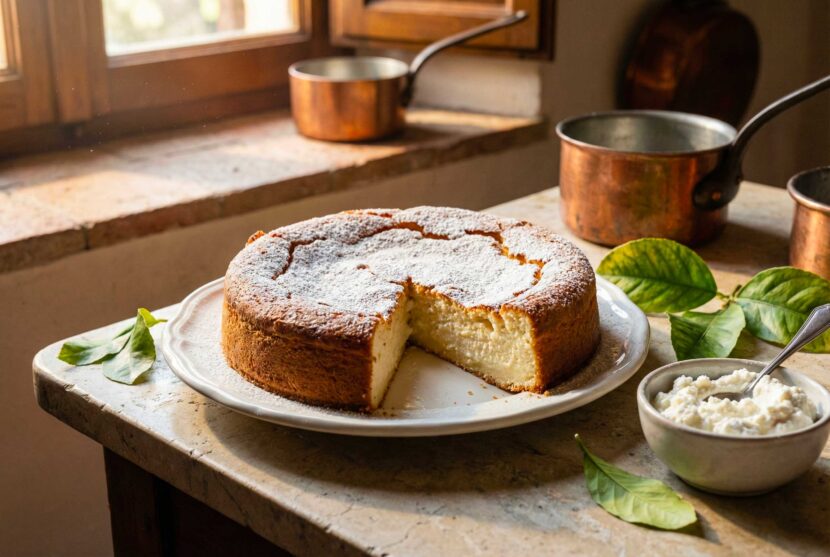
Dolce alla ricotta, a moist, lemon-scented Italian ricotta cake, is one of the most beloved “torte da credenza” (pantry cakes) found in households across the Italian peninsula. Unlike the dense, heavy New York-style cheesecake, this traditional dessert is light, airy, and remarkably simple to prepare. It perfectly embodies the Italian culinary philosophy of using fresh, high-quality ingredients to create something extraordinary. Whether enjoyed as a midday treat with a glass of cold milk or served as an elegant conclusion to a dinner party, the Dolce alla ricotta offers a delicate sweetness and a unique, slightly grainy texture that is unmistakably authentic.
The fragrance of this cake—a blend of creamy sheep or cow milk ricotta, bright citrus zest, and a hint of vanilla—evokes memories of Mediterranean springs. It is a dessert that belongs to the “cucina povera” tradition, where simple farm-fresh cheese was transformed into a celebratory sweet. Because it uses very little flour, the star of the show remains the ricotta, resulting in a crumb so soft it almost melts on the tongue. This recipe is a tribute to the timeless simplicity of Italian home baking.
Ingredients
For a truly authentic Dolce alla ricotta, try to source the freshest ricotta possible, ideally from a local creamery or a high-quality deli.
Serves 4
- Ricotta Cheese: 400g (approx. 1 ¾ cups) – well-drained (Cow or Sheep milk)
- Eggs: 3 large, organic
- Sugar: 130g (approx. ⅔ cup) Granulated sugar
- Flour: 80g (approx. ⅔ cup) Type 00 or All-purpose flour
- Baking Powder: 8g (approx. ½ tablespoon)
- Lemon: 1 organic (zest only)
- Vanilla: 1 teaspoon of pure vanilla extract or the seeds of half a pod
- Salt: A tiny pinch of fine sea salt
- Powdered Sugar: For dusting
Instructions
- Drain the Ricotta: Place the ricotta in a fine-mesh sieve over a bowl for at least 30 minutes to remove excess whey. This ensures your Dolce alla ricotta has the perfect consistency and doesn’t become soggy.
- Prep the Oven and Pan: Preheat your oven to 180°C (350°F). Grease and flour a 20cm (8-inch) springform pan or line it with parchment paper.
- Whisk Eggs and Sugar: In a large bowl, beat the eggs and sugar together using an electric mixer until the mixture is pale, thick, and has tripled in volume (about 5 minutes).
- Incorporate Ricotta: In a separate bowl, cream the drained ricotta with a fork or whisk until smooth. Gently fold the ricotta into the egg mixture, adding the lemon zest, vanilla, and salt.
- Add Dry Ingredients: Sift the flour and baking powder over the batter. Using a spatula, fold them in very gently with circular movements from bottom to top to avoid deflating the eggs.
- Bake: Pour the batter into the prepared pan and level the surface. Bake for 35–40 minutes, or until the top is golden brown and a toothpick inserted into the center comes out clean.
- Cooling: Allow the cake to cool completely in the pan. The cake may sink slightly in the middle as it cools—this is normal and part of its rustic charm.
- Serve: Dust generously with powdered sugar before slicing.
Chef’s Tips for Dolce alla ricotta
To elevate your Dolce alla ricotta to professional standards, consider these expert suggestions:
- The Ricotta Choice: Use sheep’s milk ricotta (ricotta di pecora) for a bolder, more traditional Southern Italian flavor, or cow’s milk ricotta for a milder, creamier taste typical of Northern Italy.
- Texture Secret: If you prefer a smoother, custard-like texture, you can pass the ricotta through a fine-mesh sieve before adding it to the eggs.
- Flavor Variations: While lemon is classic, you can add 50g of dark chocolate chips or a handful of toasted pine nuts to the batter for extra depth.
- Don’t Over-bake: This cake is at its best when it remains moist. Keep a close eye on it after the 35-minute mark; it should be firm but still have a slight “give.”
- Wine Pairing: Serve this with a chilled Passito di Pantelleria or a sweet Malvasia. The honeyed notes of these dessert wines complement the ricotta perfectly.
Regional Notes, History & Cultural Insights
The Dolce alla ricotta has ancient roots, particularly in Central and Southern Italy. In Rome, a famous variation known as Torta di Ricotta alla Romana often includes raisins and pine nuts, a recipe heavily influenced by the historical Jewish community of the city. In Sicily, ricotta is the undisputed queen of pastry, used in everything from Cannoli to Cassata, but the baked ricotta cake remains the everyday favorite for family gatherings.
Historically, ricotta was a way to use the whey left over from making cheeses like Pecorino or Provolone. Because it was highly perishable, it had to be used quickly, leading to the creation of many “last-minute” desserts. Unlike the elaborate pastries found in Italian pasticcerie, this cake belongs to the domestic sphere. It represents the “care” of an Italian mother or grandmother, turning humble leftovers into a center-piece of the table. Today, it remains a symbol of Italian hospitality—simple, honest, and welcoming.
FAQ
Can I make this Dolce alla ricotta gluten-free?
Yes! You can easily substitute the 80g of flour with cornstarch (fecola di patate) or almond flour. This will result in an even softer, more delicate texture.
Does this cake need to be refrigerated?
Since it is a cheese-based dessert, it is best to store any leftovers in the refrigerator. However, for the best flavor and texture, let it sit at room temperature for 20 minutes before serving.
Why is my ricotta cake too dense?
If your Dolce alla ricotta feels heavy, you may have over-mixed the flour or failed to whip the eggs sufficiently. The air trapped in the eggs is what provides the lift for this rustic cake.
Can I use frozen ricotta?
We strongly advise against using frozen ricotta. The freezing process changes the cellular structure of the cheese, which will cause the cake to release too much water and become grainy.
Conclusion
The Dolce alla ricotta is a masterclass in Italian simplicity. It doesn’t need heavy frostings or complex decorations to shine; its beauty lies in its fragrance and its cloud-like crumb. By following this recipe, you are bringing a piece of authentic Italian tradition into your home. Buon appetito!
Discover the historical evolution of Italian dairy-based desserts at the Accademia Italiana della Cucina.


