

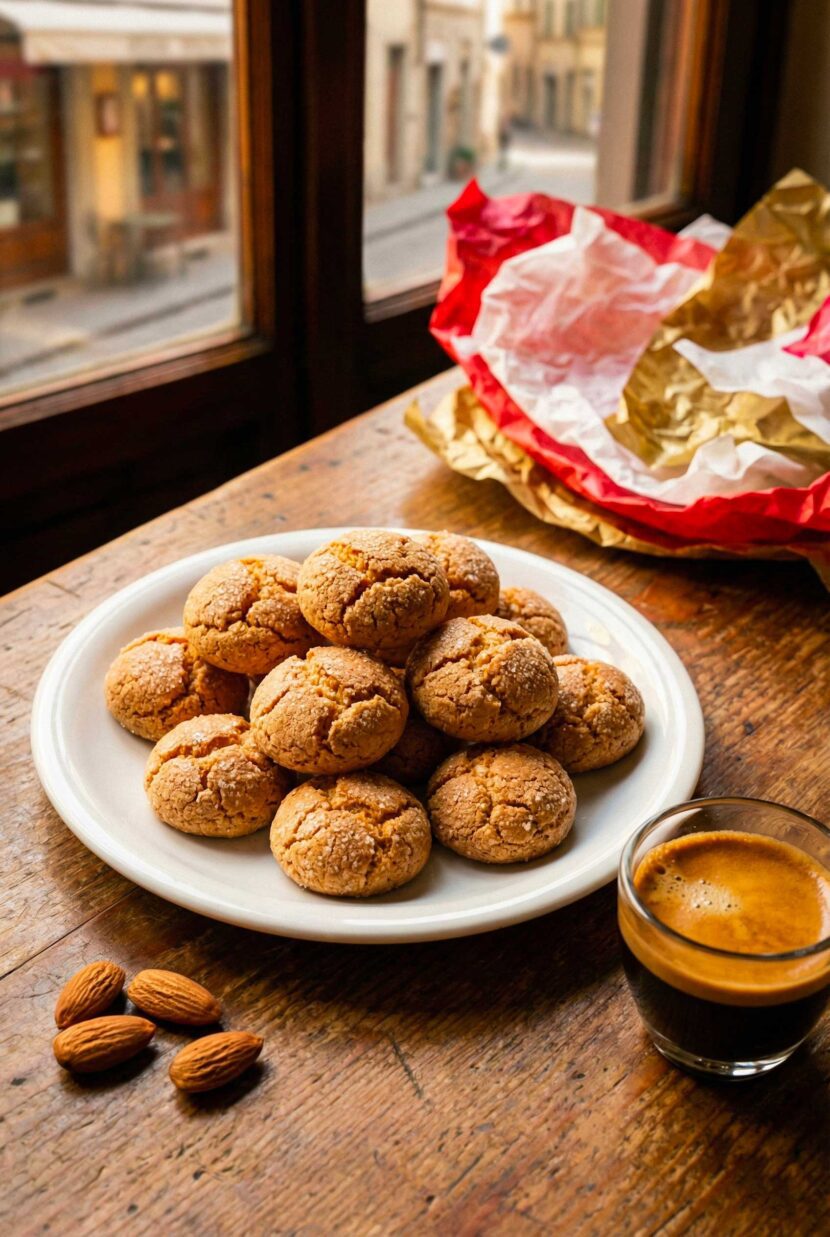
The Amaretti di Saronno vera ricetta, the true and original recipe for these legendary crunchy almond cookies, is a cherished secret of the Lombardy region that has conquered palates worldwide. Unlike the soft amaretti morbidi found in other parts of Italy, the Saronno variety is famous for its distinct “scrunch,” its hollow airy center, and that sophisticated bittersweet aftertaste. For an international lover of Italian sweets, biting into one of these golden domes is like experiencing a crisp autumn afternoon in a Lombard piazza. They are not just biscuits; they are a piece of Italian history, traditionally wrapped in elegant, colorful tissue paper that, according to local legend, can be burnt to see if a wish comes true.
To follow the Amaretti di Saronno vera ricetta means respecting the delicate balance between sweet and bitter almonds. The unique flavor comes from the armelline—the kernels found inside apricot stones—which provide that unmistakable, slightly boozy aroma. These biscuits are the perfect accompaniment to a glass of dessert wine or a steaming espresso, and they are frequently crushed to provide the soul for other Italian masterpieces like Pesche Ripiene or Bonet. Creating them at home fills the kitchen with a nostalgic, toasted nut fragrance that is the very essence of Italian domestic warmth.
Ingredients
To achieve the authentic crunch of the Amaretti di Saronno vera ricetta, you must use high-quality almonds.
Serves 4 (Makes approximately 24-30 cookies)
- Sweet Almonds (peeled): 200g (approx. 1 ½ cups / 7 oz)
- Bitter Almonds or Apricot Kernels (Armelline): 50g (approx. ⅓ cup / 1.7 oz) – This is the secret for the authentic bitter note
- Granulated Sugar: 200g (approx. 1 cup)
- Egg Whites: 2 large (approx. 60-70g), at room temperature
- Powdered Sugar: For dusting (optional)
- A pinch of salt
Instructions
- Prepare the Almonds: Place both the sweet and bitter almonds in a food processor along with half of the sugar. Pulse until you obtain a very fine, flour-like consistency. Be careful not to over-process, or the almonds will release their oils and turn into a paste.
- Whisk the Egg Whites: In a clean glass or metal bowl, whisk the egg whites with a pinch of salt. When they start to foam, gradually add the remaining sugar. Continue whisking until you reach “stiff peaks”—the mixture should be glossy and firm.
- Incorporate the Dry Ingredients: Gently fold the almond flour into the egg whites using a spatula. Use slow, circular movements from bottom to top to keep the mixture airy. The result should be a thick, sticky dough.
- Shape the Amaretti: Transfer the mixture into a piping bag with a smooth nozzle (about 1cm). On a baking sheet lined with parchment paper, pipe small mounds about the size of a walnut, leaving plenty of space between them as they will expand. Alternatively, use two spoons to form small balls.
- The Secret Touch: Lightly dampen your fingertips with water and gently press down any peaks on the cookies to create a smooth, rounded top. Sprinkle very lightly with powdered sugar if desired.
- Bake: Preheat your oven to 150°C (300°F). Bake for about 25–30 minutes. The amaretti are ready when they are golden brown and feel firm to the touch.
- Cooling: This is crucial. Let them cool completely on the baking sheet. As they cool, they will harden and develop that signature “hollow” crunch.
Chef’s Tips for Amaretti di Saronno vera ricetta
The success of the Amaretti di Saronno vera ricetta lies in the drying process.
- The Bitter Element: If you cannot find bitter almonds or apricot kernels, you can use 250g of sweet almonds and add a teaspoon of high-quality bitter almond extract, though the texture of the ground armelline is superior.
- Sifting is Key: Always sift your almond-sugar mixture after grinding to ensure there are no large bits, which would ruin the elegant, smooth surface of the cookie.
- Low and Slow: Do not be tempted to raise the oven temperature. These cookies need to “dry out” more than bake to achieve the correct friability.
- Storage: Once perfectly cooled, store them in an airtight tin. They will stay crunchy and delicious for up to two weeks—if they last that long!
Regional Notes, History & Cultural Insights
The story behind the Amaretti di Saronno vera ricetta is as sweet as the cookie itself. According to legend, in 1718, the Cardinal of Milan unexpectedly visited the town of Saronno. A young couple, wanting to honor him but having only a few ingredients—sugar, egg whites, and apricot kernels—hurriedly baked these biscuits. The Cardinal was so impressed by their unique bittersweet flavor that he blessed the couple, and the recipe became a local treasure.
Historically, Saronno (located in the province of Varese, Lombardy) became the world capital of these treats thanks to the Lazzaroni family, who industrialized the production in the late 18th century. In Italy, these are categorized as “bisconcotti” (twice-cooked) philosophy, focusing on long shelf life and intense flavor. They are culturally significant during the Christmas period but are enjoyed year-round as a sophisticated treat. The distinctive red tin and the thin tissue paper associated with Saronno are icons of Italian design, often found in the pantries of Italian grandmothers as a symbol of hospitality.
FAQ
What is the difference between Amaretti di Saronno and Amaretti Morbidi?
The Amaretti di Saronno vera ricetta produces a hard, crunchy, and airy biscuit. Amaretti Morbidi (popular in Sassello or Sardinia) contain more moisture and honey, resulting in a soft, marzipan-like interior.
Can I make these cookies nut-free?
Unfortunately, no. The soul of this recipe is the almond. However, for those with gluten sensitivities, these are naturally gluten-free as they contain no wheat flour.
Why did my amaretti turn out flat?
This usually happens if the egg whites were not whipped to stiff enough peaks or if the almond flour was folded in too aggressively, causing the air to escape.
Are apricot kernels safe to eat?
In the small quantities used in the Amaretti di Saronno vera ricetta, they are safe and traditional. The heat of the baking process also helps neutralize certain compounds. They provide the authentic “amaro” (bitter) flavor that extract cannot perfectly replicate.
Conclusion
The Amaretti di Saronno vera ricetta is more than just a baking project; it is a journey into the heart of Lombardy’s culinary soul. With their delicate crunch and sophisticated aroma, these biscuits bring a touch of old-world Italian elegance to any table. Whether you are gifting them in a glass jar or enjoying them with a glass of Amaretto liqueur, you are tasting a tradition that has remained unchanged for centuries. Infornateli e godetevi il profumo! (Bake them and enjoy the scent!)
Discover the history of traditional Lombardy confectionery at the Accademia Italiana della Cucina.


