

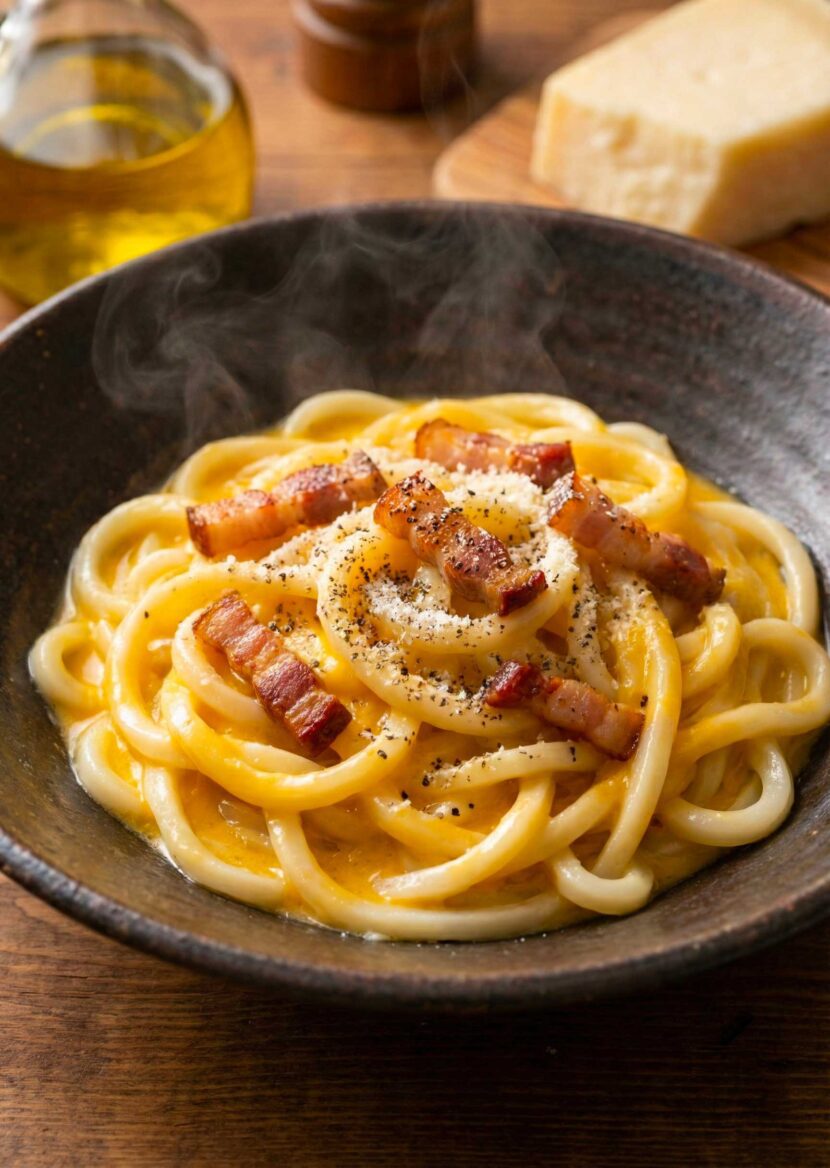
Udon alla Carbonara, a bold and creamy fusion of thick Japanese wheat noodles and the iconic Roman egg and guanciale sauce, represents a modern culinary dialogue between two of the world’s most beloved food cultures. This dish takes the chewy, satisfying texture of Japanese udon and marries it to the velvety, peppery richness of a traditional Roman soul. Imagine the golden hue of high-quality organic egg yolks clinging to thick, pillowy strands, punctuated by the intense, savory crunch of perfectly rendered guanciale.
While traditionalists might raise an eyebrow, this dish celebrates the “universality” of Italian flavors. The heat of the freshly boiled udon is just enough to transform the Pecorino Romano and egg mixture into a luscious cream, without scrambling. It is a sensory experience that bridges the gap between the bustling streets of Tokyo and the historic trattorie of Rome. Whether you are looking for a comforting weeknight dinner or a creative way to showcase your love for Italian technique, this recipe offers a unique, silky mouthfeel that only the thickness of udon can provide. It is a testament to how the spirit of Italian cuisine continues to evolve and inspire across borders.
Ingredients
To achieve the perfect balance of flavors for this fusion masterpiece, quality is paramount. Serves 4
- Udon noodles: 800g (approx. 28 oz) – fresh or frozen are preferred over dried for the best texture.
- Guanciale (cured pork cheek): 200g (7 oz), sliced into strips or cubes.
- Pecorino Romano DOP: 100g (3.5 oz), finely grated.
- Large Eggs: 4 whole eggs + 2 yolks (room temperature).
- Black Pepper: 2 tablespoons, whole peppercorns to be freshly toasted and crushed.
- Sea Salt: For the noodle water (use less than usual, as both guanciale and Pecorino are salty).
Instructions
- Prepare the Guanciale: In a large skillet or pan, place the guanciale over medium heat. Sauté slowly until the fat has rendered and the meat becomes golden and crispy. Remove from heat, but keep the rendered fat in the pan.
- Toast the Pepper: In a separate small pan, toast the whole peppercorns until fragrant, then crush them coarsely using a mortar and pestle. This releases the essential oils for a more vibrant kick.
- The “Crema”: In a medium bowl, whisk together the whole eggs, yolks, and the grated Pecorino Romano until a thick, pale paste forms. Add a generous amount of the crushed black pepper.
- Cook the Udon: Bring a large pot of lightly salted water to a boil. Add the udon noodles. If using frozen, they usually only need 2–3 minutes. Once they are “al dente” (chewy but cooked through), use a spider strainer to transfer them directly into the skillet with the guanciale fat.
- Emulsify: Toss the noodles in the guanciale fat over medium-low heat for 30 seconds to coat them thoroughly. If the pan is too hot, remove it from the heat for a moment.
- The Final Step: Pour the egg and cheese mixture over the udon. Add a splash of the hot noodle cooking water (about 1/4 cup). Stir and toss vigorously and quickly. The residual heat will cook the eggs into a creamy sauce without curdling them.
- Serve: Plate immediately, topping with the reserved crispy guanciale, an extra sprinkle of Pecorino Romano, and more black pepper.
Chef’s Tips for Udon alla Carbonara
The secret to a flawless Udon alla Carbonara lies in the temperature control. The biggest mistake is adding the egg mixture to a pan that is still sitting on a high flame, which results in “scrambled eggs” rather than a cream.
- The “Water” Secret: Never discard your cooking water too early. The starch released by the udon is essential for emulsifying the fat and the cheese into a glossy sauce.
- Guanciale vs. Bacon: While some use bacon, authentic flavor requires guanciale. Its fat content and curing spices are what give the dish its distinctive Roman character.
- Wine Pairing: Pair this dish with a structured white wine from Lazio, such as a Frascati Superiore, which has the acidity to cut through the richness of the egg and pork fat.
- Serving: Udon absorbs liquid faster than spaghetti; serve it in warmed bowls to keep the “crema” fluid for as long as possible.
Regional Notes, History & Cultural Insights
While the base of this recipe is rooted in the Lazio region, specifically Rome, Udon alla Carbonara is a shining example of “Italo-Japanese” fusion. The history of the original Carbonara is often debated; some say it was the meal of charcoal burners (carbonari), while others point to the influence of American troops in WWII providing eggs and bacon to local cooks. You can explore the classic roots in our recipe for Spaghetti alla Carbonara.
In Japan, there is a long-standing tradition called Wanyosei, where Western recipes are adapted to Japanese tastes and ingredients. Udon, with its neutral flavor and heavy “bite,” proved to be the perfect vessel for the intense saltiness and creaminess of the Roman egg sauce. This cultural exchange highlights the flexibility of Italian gastronomy. In Italy today, many young chefs in Milan and Rome are experimenting with these international grains, recognizing that the “soul” of a dish lies in the technique and the quality of the Italian ingredients like Pecorino Romano DOP.
According to the Accademia Italiana della Cucina, the traditional ingredients for the sauce remain sacred, but the evolution of the “pasta” element shows how Italian culture continues to influence global modern dining.
Conclusion
Creating Udon alla Carbonara at home is a wonderful way to bring a touch of contemporary flair to your kitchen while honoring the timeless techniques of Rome. It is a dish that speaks of travel, curiosity, and the simple joy of a perfectly executed sauce. We invite you to try this silky, peppery delight and experience how two different worlds can find perfect harmony in a single bowl.


