

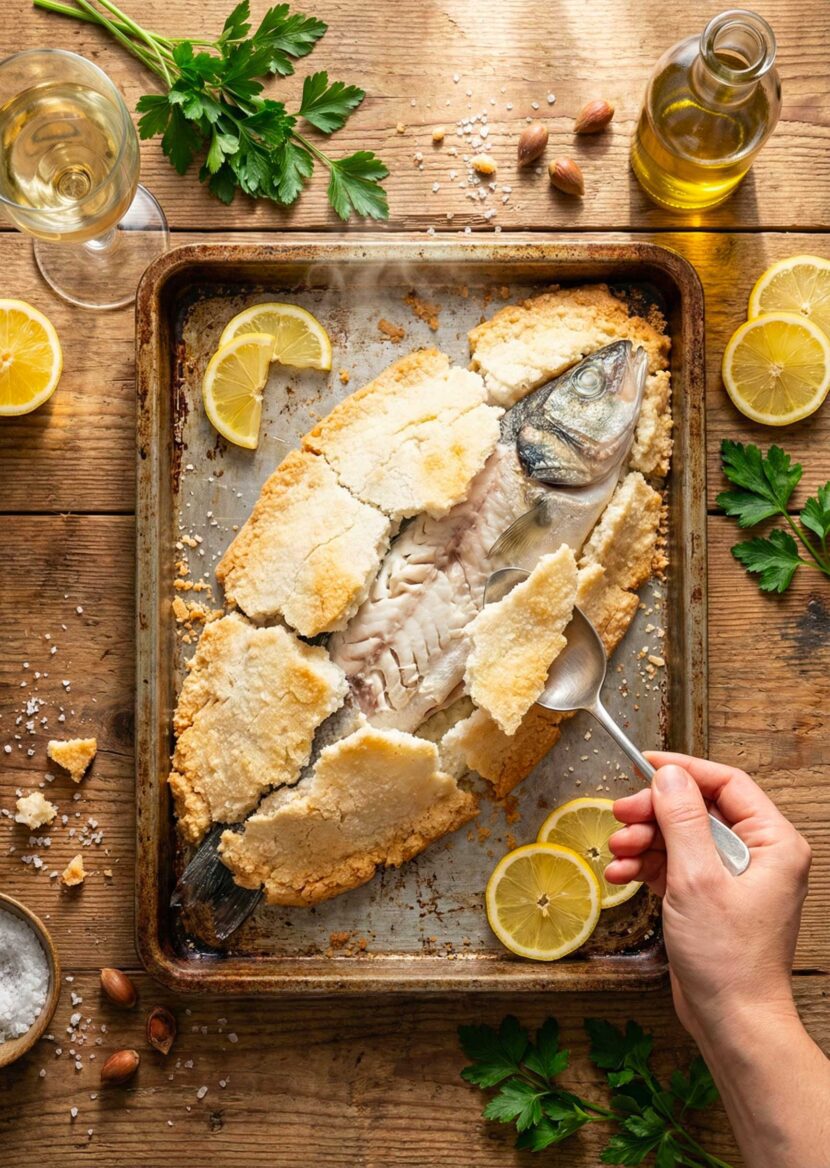
Branzino al Sale is one of the most iconic, theatrical, and arguably the most delicious ways to serve fresh fish in Italian coastal cuisine. There is a primal elegance to encasing a whole fish in a hard shell of coarse sea salt; it acts as a kiln, sealing in every ounce of moisture and forcing the aromas of lemon and herbs deep into the delicate white flesh. While it looks intimidatingly professional—often served tableside in Italy’s finest trattorias—it is surprisingly simple to make at home.
In Italy, Sunday lunch is sacred, and a platter of salt-crusted sea bass often takes center stage, representing the purity of the Mediterranean diet. The result is never salty; rather, the fish steams in its own juices, emerging incredibly tender and pristine. Whether you are dining seaside in Campania or in a home kitchen in Milan, this dish speaks the language of freshness. This recipe yields 4 generous servings, perfect for a family gathering.
Ingredients
Serves 4
To achieve the perfect crust and flavor, high-quality coarse salt is non-negotiable.
- 2 Whole Branzino (European Sea Bass): Approx. 1.5 lbs (700g) each, gutted and cleaned, but head and tail left on.
- Coarse Sea Salt: 4.4 lbs (2 kg). Note: Do not use fine table salt.
- Egg Whites: 3 large egg whites (lightly beaten).
- Water: 1/2 cup (120ml), adjusted as needed.
- Lemons: 2 organic lemons (one sliced for stuffing, one for serving).
- Fresh Herbs: 1 bunch of fresh parsley, 4 sprigs of fresh thyme, 2 sprigs of rosemary.
- Garlic: 2 cloves, smashed (optional).
- Extra Virgin Olive Oil: For drizzling at the end.
Instructions
- Preheat and Prep: Preheat your oven to 400°F (200°C). Rinse the fish under cold water and pat them thoroughly dry with paper towels. Note: Ensure the fish has been gutted, but leave the scales on if possible; they help prevent the meat from absorbing too much salt. If your fishmonger scaled them, don’t worry—the skin still acts as a barrier.
- Stuff the Fish: Season the inside cavity of the fish with a pinch of black pepper (no salt needed inside). Stuff the cavity generously with lemon slices, parsley, garlic, and rosemary.
- Prepare the Salt Crust: In a large mixing bowl, combine the coarse sea salt and the lightly beaten egg whites. Mix with your hands. Gradually add water, a tablespoon at a time, mixing until the salt feels like wet sand or slushy snow. It should pack together when squeezed.
- Build the Bed: Line a baking sheet with parchment paper. Spread a layer of the salt mixture (about 1/2 inch thick) on the paper in the shape of the two fish.
- Cover the Fish: Place the stuffed Branzino on top of the salt bed. Completely cover the fish with the remaining salt mixture, pressing it down firmly to create a sealed dome. You can leave the tip of the tail or the head exposed for presentation, but covering it entirely ensures even cooking.
- Bake: Place in the oven and bake for approximately 25–30 minutes.
- Rest and Serve: Remove from the oven and let it rest for 5 minutes. Crack the hard salt crust with a spoon or the back of a knife. Gently lift away the chunks of salt and peel back the skin. Fillet the fish and serve immediately with a drizzle of high-quality olive oil.
Chef’s Tips for Branzino al Sale
Mastering Branzino al Sale is about confidence and timing. Here are a few secrets to ensure perfection:
- Don’t Overcook: The salt holds heat well, so the fish continues to cook slightly after being removed from the oven. If you have a meat thermometer, the internal temperature should reach 135°F (57°C). If not, check the eye of the fish (if exposed); it should be opaque white, not translucent.
- The “Glue”: While some purists use only water and salt, adding egg whites creates a harder, more airtight crust that lifts off in larger clean chunks, making the “unveiling” much less messy.
- Serving: Serve this delicate fish with roasted potatoes or a fresh fennel and orange salad.
- Wine Pairing: This dish screams for a crisp, mineral-forward white wine. A Vermentino from Sardinia or a Falanghina from Campania pairs beautifully with the savory, oceanic notes of the fish.
- Variation: You can use this method for other white fish like Orata (Sea Bream) or Snapper, provided they are whole and fresh.
Regional Notes, History & Cultural Insights
The technique of cooking food encased in salt, or even clay, dates back to ancient civilizations, but it was the Romans who refined the art of preserving and cooking with salt. Branzino al Sale is a dish that transcends specific regional borders, found in coastal towns from Liguria in the north to Sicily in the south. However, it holds a particularly special place in the culinary heart of Southern Italy and the islands.
Historically, salt was a precious commodity (the root of the word “salary”), so using kilograms of it to cook a single meal was once a display of status. Today, it is a celebration of the Mediterranean Sea’s bounty. In regions like Campania, this dish is a staple for Il Cenone della Vigilia (Christmas Eve dinner), where seafood is mandatory.
The beauty of this method lies in its physics. The salt crust creates a hermetic seal. Unlike roasting, where moisture evaporates, the salt traps the fish’s natural juices. As noted by culinary historians, this method allows the fish to cook in its own “marine atmosphere.” For a deeper dive into the history of Mediterranean cooking techniques, you can explore resources from the Accademia Italiana della Cucina.
Because this dish is so light, it is often followed or preceded by other seafood classics. If you are planning a full Italian seafood feast, consider starting with our recipe for Spaghetti alle Vongole to complete the experience.
Conclusion
There is a profound satisfaction in cracking open the crust of a Branzino al Sale. As the steam escapes, carrying the scent of thyme and lemon, you realize that the best Italian food isn’t about complex sauces, but about respecting ingredients. This recipe brings the Italian coast directly to your dining table, offering a meal that is healthy, elegant, and unforgettable. Invite friends over, pour the wine, and enjoy the drama of the salt crust!


